


General Research > Nomadism

"Since [nomadic] settlements are temporary, they hardly affect the natural environment at all; although they draw from the resources of the countryside—water, grass, wood—they seldom destroy these natural resources."
—Constantinos Doxiadis, Ekistics

Domestibeasts interact with their environment similar to the way nomads interact with their environments.
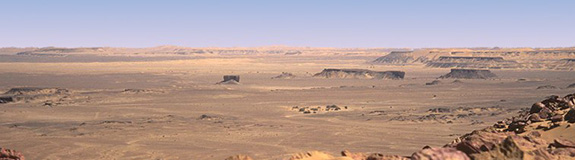

Nomads must navigate a territory marked mainly by disorienting sameness. Nomads use a heightened awareness of shadows, color preferences, topographic references, and textural variation to pick out meaningful and recognizable features from the environment.
Such heightened environmental awareness allows nomads to follow resources in a dynamic environment and to communicate location and direction to others in a network of spatial knowledge.
Resource
Labelle Prussin, African Nomadic Architecture: Space, Place and Gender, Washington and London: Smithsonian Institution Press and The National Museum of African Art, 1995.