


Design > Migration Patterns
Domestibeasts create dynamic models of space based on recurring predictable symbols in the natural (suburban) environment. Provisional meanings—such as the presence of water or radiant heat—can be assigned to these symbols in order to create a sense of territories and space. This process mirrors the traditional nomads' use of a hodological space system*.
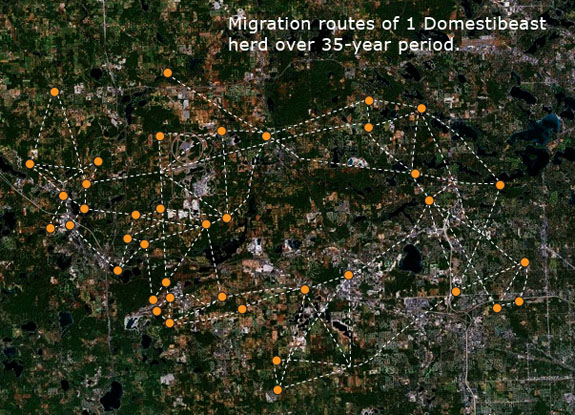
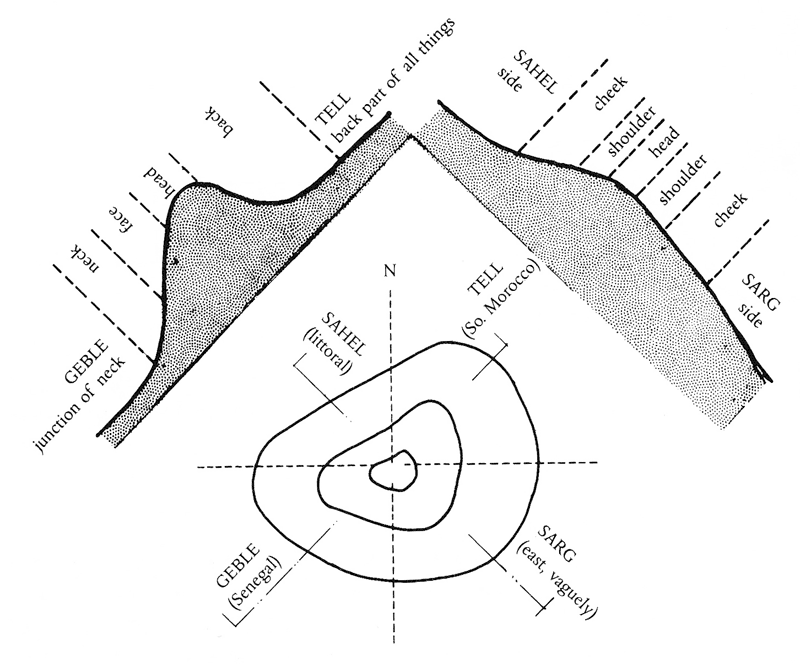 *Modern western space systems are based on stationary living conditions using static coordinates in abstract space. A hodological space system is defined by the orientation of the body in a fluid, dynamic space that changes from season to season.
As is common of nomads throughout the contemporary and ancient world, Domestibeasts follow the seasonal movement of food, friendly weather and other natural resources.
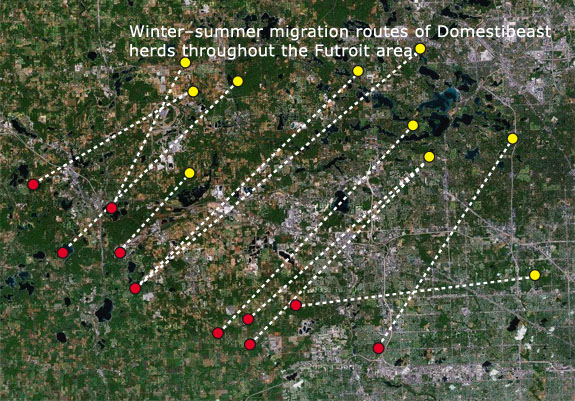
For comparison, typical migratory patterns of nomadic peoples of the Sahel region of North Africa:
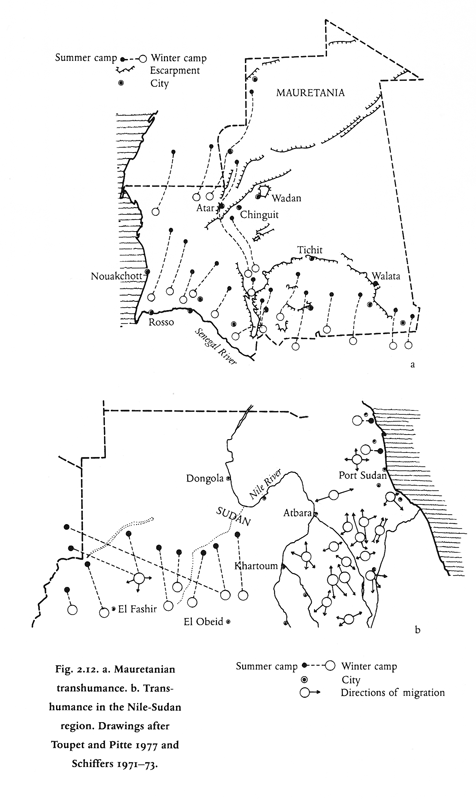
Source: Labelle Prussin, African Nomadic Architecture: Space, Place and Gender, Washington and London: Smithsonian Institution Press and The National Museum of African Art, 1995, p. 38.